


Protective Hairstyles for Hair Growth: Tension, Weight and Wear-Time Rules That Actually Protect Edges
The phrase protective style gets used for almost anything braided, twisted or covered. Yet the same braids that protect one person's ends can pull out another person's edges, depending on how tight they are, how much hair hangs from each one and how long they stay in. This pillar guide turns protective hairstyles for hair growth into a set of rules you can check: tension, weight, wear time, care and the warning signs. It makes no growth promises, because no style can make a follicle grow faster. What it can do is help you keep the hair you grow.
What actually makes a style protective?
A style protects when it reduces daily stress. It earns the name by cutting down combing, heat, friction and manipulation of your own hair, without adding new stress through tension, weight or a scalp that cannot be cleaned.
That definition matters because it is about what the style does, not what it is called. Braids, twists, crochet styles and wigs can all be protective, and all of them can become damaging. The test is the trade: how much daily wear you avoid versus how much pull you add.
| What a style removes | What it can add |
|---|---|
| Daily combing and brushing | Tension at the roots and hairline |
| Heat styling and chemical straightening | Weight from added hair |
| Friction on the ends | Buildup if the scalp is hard to wash |
| Daily restyling | Matting if worn too long |
Dermatology research supports the gentle side of the table. A review of traction alopecia in patients of African descent found that natural hair, loose hairstyles and wigs are associated with the least risk of traction, while tight braids, weaves and extensions carry the most. In other words, protection comes from lowering stress, and a style only qualifies while it keeps doing that.
How much tension is too much?
Any tension that hurts is too much. A protective style should feel comfortable from the first hour; pain, stinging or tightness during or after installation means the hair is being pulled hard enough to damage the follicle.
People often accept a sore first night as normal. It is not. Dermatologists who review hair camouflage options advise that discomfort, pulling, redness or pustules should prompt loosening of the braids to prevent permanent follicle damage. The earlier you act, the better.
Use a simple three-point check after any install:
- Move your face. Raise your eyebrows and smile. If the hairline braids pull, they are too tight.
- Look at the skin. Tented skin or small bumps around a braid mean that braid is under strain.
- Lie down. If you cannot rest your head without soreness, the style needs adjusting.
Ask your stylist to redo any braid that fails the check before you leave the chair. Taking painkillers to get through the first days is a sign the style is too tight, not a solution. A slightly looser braid may need a refresh sooner, and that is a better trade than a thinner hairline.
How long should you keep each style?
Wear time depends on the style type. Braid-based styles have a limited window before new growth and buildup add strain, while removable styles such as wigs can come off daily and give the hair regular rest.
Use these as upper limits, not targets. Take any style down sooner if it hurts or the scalp is struggling.
| Style type | Wear-time guidance | Source of the guidance |
|---|---|---|
| Braids and cornrows | No longer than about 6 to 8 weeks | American Academy of Dermatology |
| Weaves and extension styles | No longer than 2 to 3 months | Clinical review of traction alopecia |
| Crochet styles | Follow the limit for the braided base underneath | Same as braids |
| Wigs | Remove daily; wear over a satin cap | Clinical review of traction alopecia |
The braid guidance comes from the American Academy of Dermatology, which caps braided styles at 6 to 8 weeks of wear. The extension and wig guidance comes from the clinical review cited above. Between installs, give your hair a rest period with a loose style before rebraiding.
Plan the takedown date before the install, not when the style starts to look tired. Styles often look fine for longer than they are comfortable for the follicles, so the date is a safer guide than the mirror.
Which style fits which stage of growth?
Match the style to the hair you have now. Short hair needs styles that grip without pulling, mid-length hair can carry light extensions, and longer hair can hold more styles but has older, more fragile ends to protect.
Length changes what each style asks of your hair. Very short hair has little to grip, so braided extensions put the full load on a small amount of hair at the root. Longer hair has more to hold, but its ends have been through more washing and styling.
| Stage | Gentler options | Approach with care |
|---|---|---|
| Short or recently cut | Wigs over a satin cap, loose twists | Small braids with long added hair |
| Mid-length | Larger braids, crochet on a sturdy base | Heavy jumbo braids |
| Long | Most styles at moderate length | Very long, heavy extensions |
| Transitioning from relaxer | Low-manipulation styles, wigs | Braids and extensions on relaxed ends |

The transitioning row matters most. A clinical review of traction alopecia explains that risk rises with the extent and duration of pulling and with chemical relaxation, so relaxed ends under braids or extensions are the weakest link. Lighter, low-manipulation styles are the safer bridge until the relaxed hair is trimmed away.
How do you moisturize under a protective style?
Clean the scalp, then condition and seal the lengths. Moisture under a style comes from regular washing and conditioning followed by a light leave-in, not from layering heavy oils on top of an unwashed scalp.
A protective style is not a reason to skip wash day. Dermatology advice for Black hair is to follow every shampoo with conditioner, and under braids or crochet that step is what keeps the lengths soft enough to resist breakage.
- Dilute shampoo and apply it between the braids, focusing on the scalp.
- Rinse with the hair hanging down so water runs along the braids.
- Condition the lengths and any loose curls, then rinse well.
- Apply a light leave-in or spray to the lengths, keeping heavy products off the scalp.
- Dry the base fully before covering it.
Between washes, mist the lengths with water and a little leave-in when they feel dry. If your style makes the scalp hard to reach, that is worth considering before the next install. Larger parts and fewer braids leave more room for water and fingers. Whatever your stage of growth, choosing the shortest added length that gives you the look also keeps the load on each root down. Our hair care page covers product-specific steps for human hair textures.
What are the signs your style is hurting your hair?
Pain, bumps and thinning edges are the main signs. Any of them means the style is stressing the follicles, and the sooner you loosen or remove it, the better the chance the hair recovers fully.
Traction damage starts quietly. Early on it can look like small bumps at the base of braids or a hairline that seems a little less dense in photos. Over time, repeated pulling can cause permanent loss; the American Academy of Dermatology warns that traction alopecia can become permanent the longer it goes untreated. Early action is what keeps it reversible.
Watch for these signs:
- Pain, stinging or a headache after styling
- Small bumps, pimples or crusts around braids
- Skin that tents up where a braid is attached
- Broken hairs or thinning at the temples and edges
- A widening part or patches that look sparse
If you see thinning or patches that do not improve after you switch to looser styles, see a doctor. Hair loss has many causes, and medical guidance on hair loss lists conditions and treatments that a professional can evaluate. A dermatologist can tell you whether the problem is traction or something else.
Which fruit stops hair fall?
No fruit stops hair fall on its own. Diet matters only when you are short of something: low iron, protein or calories can cause shedding, and correcting a real deficiency helps more than any single food.
This question comes up often, and the honest answer is less exciting than the claims online. The American Academy of Dermatology notes that too little iron or protein, or too few calories, can lead to hair loss, and that a blood test can show whether you are short of a nutrient. It also warns that hair-growth supplements are not regulated for effectiveness and that too much selenium, vitamin A or vitamin E has been linked to hair loss.
The same organization explains that when shedding comes from a deficiency, hair can regrow once your body gets enough of the missing nutrients. So the useful steps are:
- Eat a varied diet with enough protein and iron-rich foods.
- Avoid crash diets, which can trigger shedding.
- Ask a doctor about a blood test before taking supplements.
Fruit is part of a healthy diet, but it is not a hair loss treatment. Gentle styling and a real diagnosis do far more.
Which YWIGS collection fits protective hairstyles for hair growth?
Start with the protective style hair collection. It groups the crochet, braiding and extension options in one place, so you can pick a format by the rules above: light, comfortable and easy to keep clean.
Browse the protective style hair collection with your current length and wear-time plan in mind. If you prefer braids with curls, the boho human hair bulk collection lets you choose a shorter, lighter length. If you want to keep braids under the style larger, the human hair crochet collection attaches to a cornrow base.
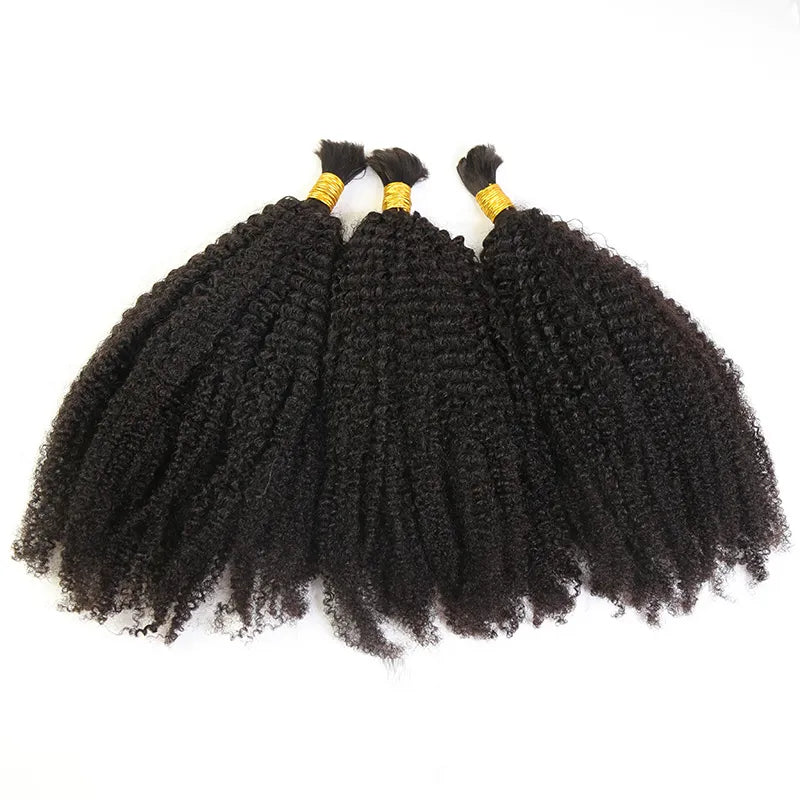
YWIGS has focused on braiding and crochet hair since 2016, with formats such as feather crochet and pre-looped pieces aimed at at-home installers who want fewer, gentler steps. Check each product page for length and pack details before you plan the install.
A good rule when shopping is to choose the format first and the texture second. Decide whether a wig, crochet or braided style fits your stage of growth and your schedule, then pick a texture close to your own hair so you need less manipulation to blend it.
No style makes hair grow faster. What a protective style can do is cut down on daily combing, heat and friction so the hair you grow is not broken off. Keep tension painless, added hair light, wear time limited and the scalp clean, and see a dermatologist if shedding or thinning continues despite gentle styling.
FAQ
What hairstyle is best for hair growth?
No hairstyle makes the follicle grow hair faster. The styles that help you keep length are the ones that are gentle: loose, low-tension and comfortable, with minimal heat and chemicals. A dermatology review found natural hair, loose hairstyles and wigs carry the least risk of traction hair loss. Braids and crochet styles can also work well when they are light, painless and worn for a limited time.
Do protective hairstyles help with hair growth?
Indirectly at best. Hair grows from the follicle at its own pace whatever style you wear. A protective style can reduce breakage from daily combing, heat and friction, so more of the length you grow stays on your head. That is length retention, not faster growth. A style that is too tight, too heavy or worn too long does the opposite and can cause hair loss.
What hairstyle is most protective?
The most protective style is the one that puts the least stress on your own hair while you wear it. For many people that means a loose style, a wig over a satin cap, or larger, lighter braids with no pulling at the hairline. Small, tight, heavy or long braids on chemically relaxed hair are the least protective combination, according to dermatology research on traction alopecia.
