


How Much Bulk Hair for Full Braids?
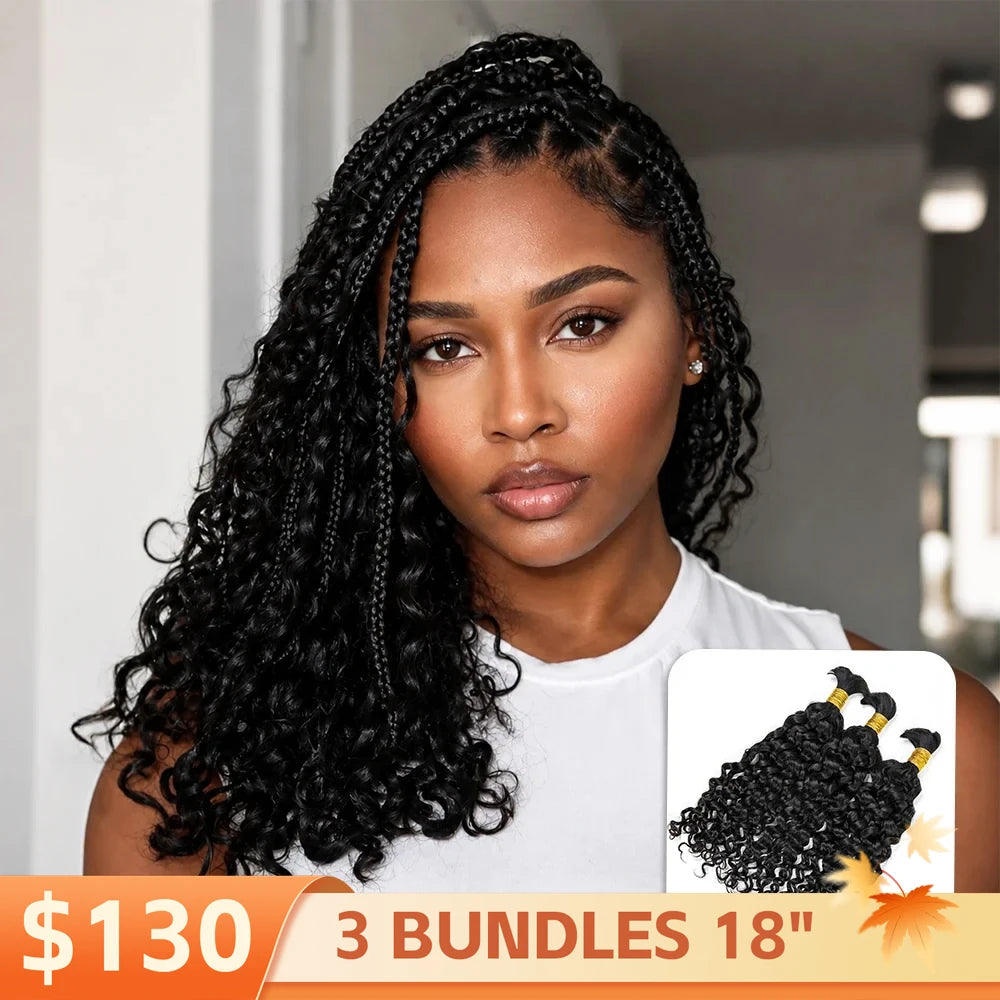
For a full head of braids, about 2.5–5 bundles of human Bulk Hair is a practical starting range, assuming roughly 100g per bundle. Medium-length boho braids may use around 2.5–3 bundles, longer styles around 3–4, and extra-long or very full looks around 4–5. Braid size, finished length, curl volume, and desired fullness can change the amount substantially.
The most useful way to estimate Bulk Hair is not to ask for one universal pack count. Instead, start with the finished style you want, then account for braid size, length, the number of loose curly pieces, and how much volume you want through the ends.
How Much Bulk Hair Do You Need for a Full Head of Braids?
Most full-head braid installations using human Bulk Hair can be planned with roughly 2.5–5 100g bundles. Lighter medium-length styles tend to sit near the lower end, while long, dense, or curl-heavy boho styles move toward the upper end.
| Finished style | Practical starting reference | Main variables |
|---|---|---|
| Medium-length, lighter braids | About 2.5–3 bundles | Braid count, natural density, curl placement |
| Longer full braids | About 3–4 bundles | Finished length and braid thickness |
| Extra-long or very full braids | About 4–5 bundles | Length, loose curls, volume and braid count |
What Does Bulk Hair Mean for Braiding?
Bulk Hair is loose extension hair without a machine-sewn weft. The braider separates the loose hair into smaller portions and incorporates those portions into box braids, knotless braids, boho braids, Fulani styles, twists, or other braided designs. It is different from Weft Bundles and from pre-sectioned Feather Crochet Hair.
How Does Braid Size Change the Amount of Bulk Hair?
Small braids produce more braid starts, while medium and large braids use fewer sections. Smaller braids do not automatically require twice as much hair because the amount added to each braid also changes.
How Does Finished Length Affect Bulk Hair Quantity?
Longer braids generally need more extension hair because each section must travel farther through the finished style. Shoulder-to-mid-back braids usually need less hair than waist-length or extra-long braids.
How Much Bulk Hair Do Boho Braids Need?
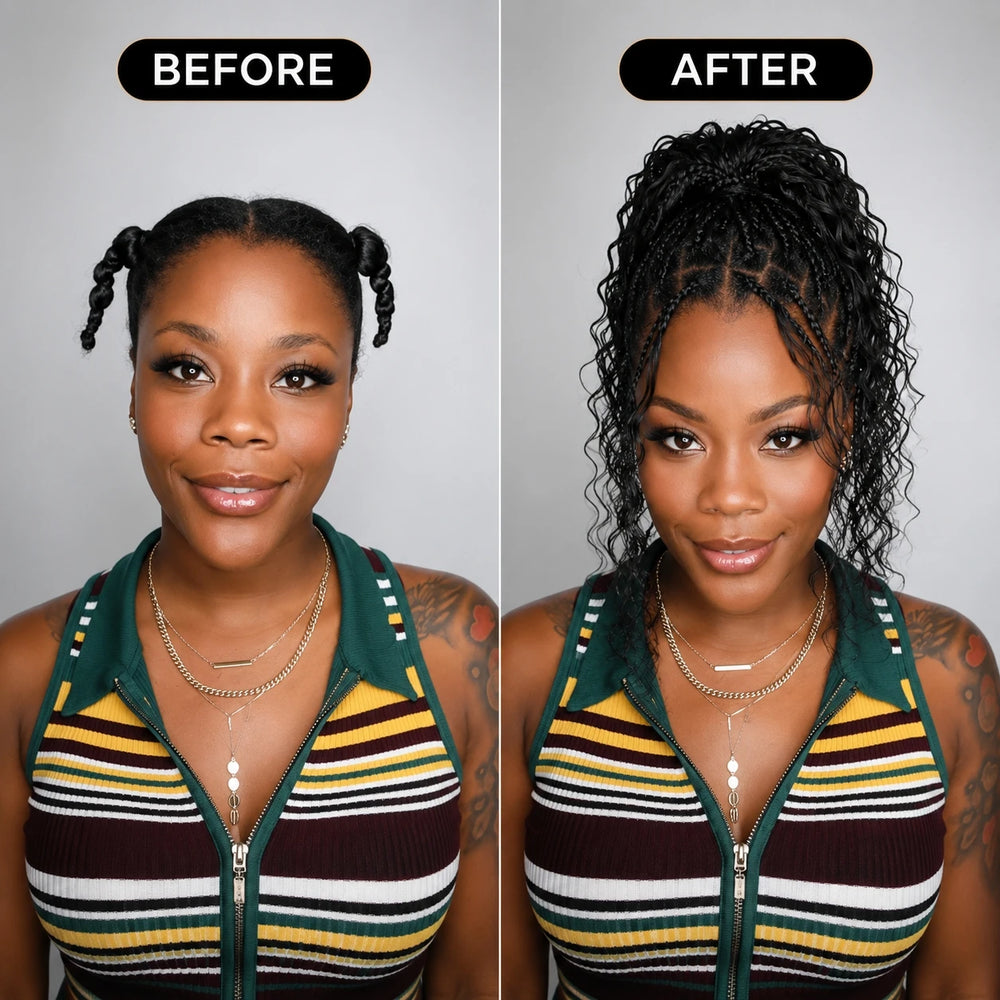
Boho braids commonly use roughly 2.5–5 bundles of 100g Bulk Hair depending on length, braid size, and the amount of loose curl. Two people with the same number of braids can use very different quantities depending on curl density and fullness.
Ywigs Expert Views
Do not estimate human braiding hair from braid count alone. Start with the finished length and desired curl volume, then consider braid size. Buying enough hair matters, but adding unnecessary weight simply to use every bundle can make the style less comfortable.
How Does Texture Change How Full the Braids Look?
Deep Wave and other defined curls can occupy more visual space, while softer wave patterns may appear less dense. Quantity is therefore partly a visual decision, not just a gram calculation.
Why Is Part of Bulk Hair Folded During Installation?
When loose Bulk Hair is incorporated into some braid installations, approximately two inches may be folded back to help anchor and secure the added section. That folded portion is part of the installation structure rather than automatically being wasted hair.
Can You Mix Different Bulk Hair Textures or Colors?
Yes. Different colors or compatible textures can be combined when the goal is dimensional boho braids, highlights, or a varied curl pattern.
How Should You Buy Bulk Hair Without Running Out?
Choose the braid style, section size, finished length, texture, desired curl volume, and check the actual weight of each bundle before ordering.
Can Too Much Bulk Hair Make Braids Uncomfortable?
Yes. More extension hair creates more weight, especially in extra-long or high-density styles. Fullness should be balanced against scalp comfort.
What Amount of Bulk Hair Should You Buy?
Start with roughly 2.5–3 100g bundles for a medium-length, moderately full style, around 3–4 for longer braids, and about 4–5 when the finished look is extra long or especially full. Then adjust for braid size, texture, curl placement, and the exact product specification.
