


Crochet Parting Plans Around a Cowlick
A cowlick can make a planned crochet part spring open or fall in a direction you did not expect. Crochet parting plans around a cowlick work best when they account for how your own hair naturally moves instead of forcing it into a perfectly straight line. Test the part, consider a different placement, and talk through the braid layout before installation begins.
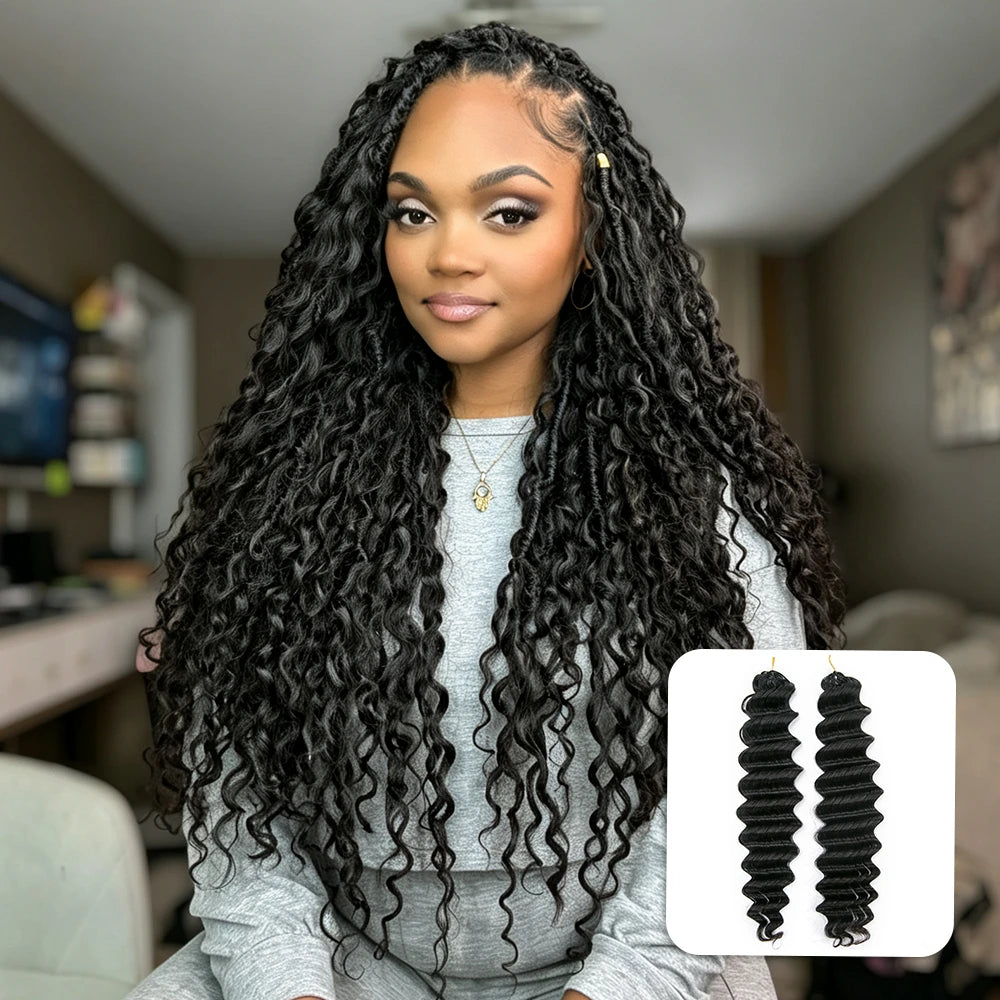
Related product: Shop Human Crochet Hair Deep Wave for Miracle Knots.
How do you part crochet hair around a cowlick?
Follow the natural direction of the hair, then test the visible part.
Choose a part and layout that cooperate with the growth pattern. Ask your stylist to adjust the plan instead of pulling the area tight to force it flat.
Start with your hair in the state you expect before installation. Look at how the cowlick falls when dry and gently separated, then try a middle, side, or less defined part. Notice which direction makes the section settle with the least effort. A part that follows the natural movement may be easier to maintain than one that requires constant smoothing.
Observe how the cowlick moves before choosing a part
Use a mirror to see where the hair changes direction and how much of the part will remain visible. Some cowlicks are small and easy to work around; others affect a larger area. You do not need to flatten or stretch the section to understand its movement.
Try shifting the part slightly to either side and let the hair rest. Check the result after a few minutes rather than judging it while holding the section in place. If the hair springs back, note which direction it prefers and share that with your stylist.
For general styling context, the American Academy of Dermatology offers guidance on styling hair without damage and styles that can pull on hair. This advice supports avoiding unnecessary tension; it does not prescribe a cowlick-specific part.

Compare a middle part, side part, and softer part line
A middle part can look balanced, but it may cross directly over a cowlick. A side part may move the visible line away from the strongest growth pattern. A softer or less defined part can also work when your goal is a fuller look rather than a sharply exposed line.
There is no universal best part. Try the options gently, take photos from the front and side, and compare which one stays comfortable and suits your face framing. If a part only looks right while you hold it down, it may not be the easiest option for everyday wear.
Tell your stylist how you plan to style the crochet hair after the appointment. A layout for a defined middle part may differ from one meant to be swept sideways or worn in a ponytail.
Plan the braid layout around the visible part
Once you choose a part, map where the base braids will sit and which natural sections may remain visible. The stylist can adapt the pattern to your head, density, and intended finish. Avoid copying a braid map from a tutorial without considering whether the part and growth direction match yours.
Ask the stylist to show where the crochet hair will be attached near the cowlick. If the layout relies on pulling the section tightly across its natural direction, discuss a different placement. It is better to adapt the part or choose a softer style than to make the area uncomfortable.
Browse the crochet braids collection and crochet curls collection for general style references. Verify the exact product details on the item you consider, then plan the part with your stylist.
Use texture and volume to soften the part
Curls can make a part look softer because they add movement around the line. If you do not want the cowlick to be the focal point, consider a style with more texture near the part or a side-swept shape. The best choice depends on the product, your hair, and how much natural hair is exposed.
Do not add extra hair solely to cover a small cowlick without considering weight and comfort. A stylist can help balance the amount and placement of crochet hair. The goal is a cohesive look that does not need to be held down all day.
Compare patterns in the human hair crochet extensions collection as a visual reference, while relying on each listing for product-specific information. Different textures may create different part visibility and volume.
Keep the area comfortable during installation
Check how the part feels while the base is prepared and while crochet hair is added. Speak up if the cowlick area feels pinched, sore, or pulled in an unfamiliar direction. A neat-looking part is not worth persistent discomfort.
The AAD advises loosening hairstyles that hurt and avoiding repeated tension. See its general hair care guidance for Black hair and its advice on preventing damage from extensions. These resources are general and do not replace the stylist’s assessment of your installation.
If the area becomes persistently irritated, painful, or starts losing hair, stop adding tension and consult a dermatologist. Cleveland Clinic’s hair loss overview explains when professional evaluation may be appropriate.
Use a cowlick parting checklist
Before installation, confirm that the part works with your natural growth pattern:
- Observe the cowlick in the state you plan to wear your hair.
- Try middle, side, and softer part options without pulling.
- Photograph the preferred angle and show it to your stylist.
- Review how the braid layout will approach the visible part.
- Ask for a pause if the section feels pinched or sore.
- Choose comfort and maintainability over a forced straight line.
For more style options, compare the crochet braids, crochet curls, and human hair crochet extensions collections. Use product listings for confirmed details and your stylist for an installation plan tailored to your hair.
FAQ
How do I part crochet hair around a cowlick?
Start by observing which direction the hair naturally falls, then test a part that works with that movement. Have your stylist adapt the crochet layout to your growth pattern instead of forcing a sharp part against it.
Can I hide a cowlick with crochet braids?
A different part, curl placement, or style shape may make a cowlick less noticeable, but results depend on your hair and the chosen look. Test the layout before installation and avoid tight pulling to hold the area down.
Should I use a middle or side part around a cowlick?
Choose the part that follows your natural fall and suits the style. A side part may work for one growth pattern while another person may prefer a different placement; try both gently before deciding.
What if my crochet part will not stay flat over a cowlick?
Do not keep pulling it tighter. Ask your stylist to adjust the part or choose a style that works with the natural direction. Seek medical advice if the area is irritated or changing unexpectedly.
Test the part before installation and explore crochet textures that work with your natural hair movement.
More on this topic: How to Install Crochet Hair guide.
