


How Do You Maintain Deep Wave Crochet Hair?
Deep wave crochet hair keeps its look when the routine matches the texture — see how deep wave sits among the crochet textures — and the routine below is built around it. the two things this texture does: it dries more slowly than looser waves, and it holds product in the ends. The maintenance is not complicated — it is a rinse habit, a wash rhythm, a drying order, and knowing what is build-up instead of damage.
What changes the wave first
The wave pattern flattens for a few reasons, and most of them are routine, not the hair. Leftover product makes the strand heavy; chlorine or salt left to dry in stiffens the cuticle; sleeping on the set without a satin layer crushes the wave and fuzzes the ends. If the set looked defined on day one and flat by day three, the causes are almost always those three. Fixing them is a matter of order: rinse after water, keep product off the ends, and protect the set at night; if the hairline is tender, installing crochet hair on thin edges without tension explains why loose rows matter.
What you are actually caring for
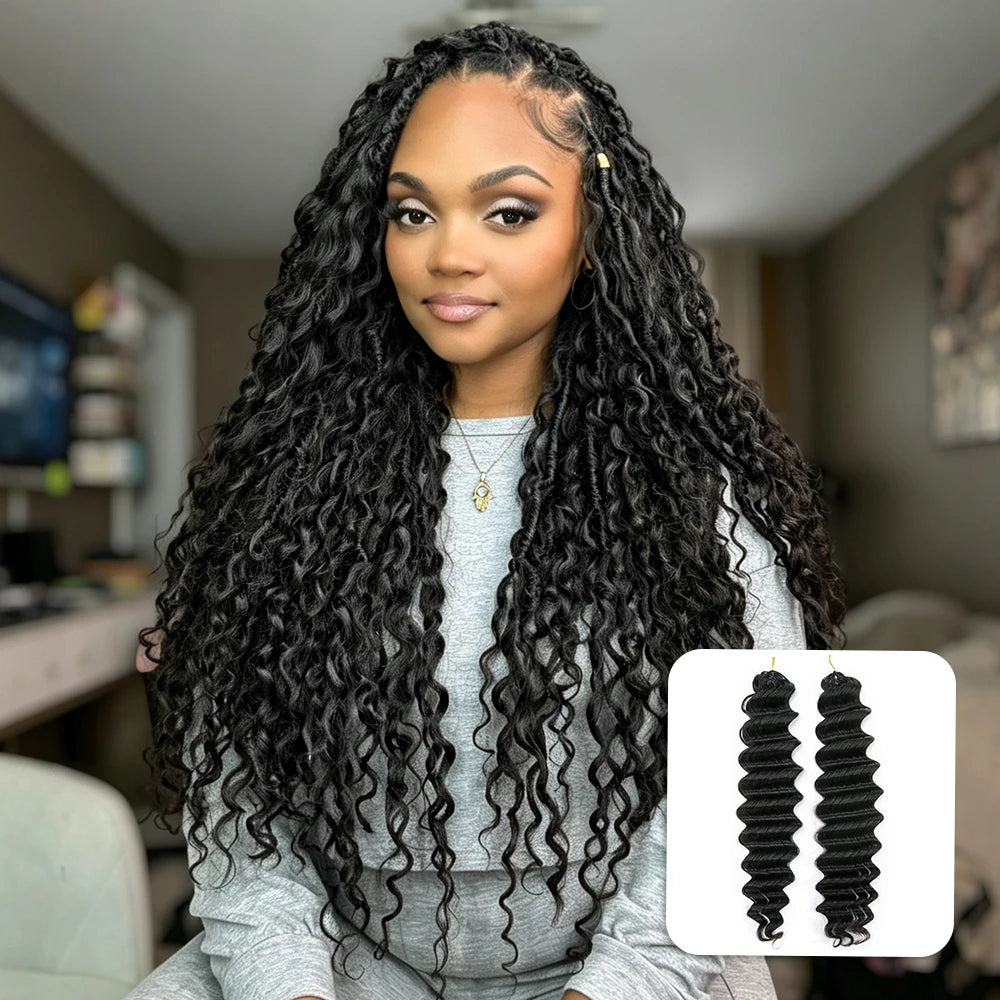
On the Ywigs deep wave listing, the set is human hair crochet sold at 55–60 g per bundle, about 50 strands per bundle, in 14–22 inch lengths. Those numbers matter for care: the grams and strand count tell you how dense the set is, and the length tells you how the weight sits — a longer install carries more weight even at the same bundle count, which is part of why the ends and the base behave differently during drying. Match the routine to the specific density and length you bought rather than to a blanket rule.
Rinse, not wash, is the daily act
On most days the set may need no more than a rinse rather than a full wash, and some days it needs neither. When you do rinse — after a swim or a heavy sweat, or when the ends feel coated — run fresh water through the length, squeeze the excess, and let it dry loose. This removes the chlorine or salt that would otherwise dry into the strand and dull the wave. A full wash is a weekly event: wet the base and scalp, use a gentle shampoo on the scalp and let the suds pass down the length, then condition the ends and rinse with cool water. Cleaning shampoo and conditioning are different jobs — a conditioner is not a removal step for build-up, and a shampoo left undiluted is not a good leave-in. The full wash sequence, including reuse, is in how to wash and reuse pre-looped crochet hair. Follow the product’s own wash guidance for the set you are wearing.
Drying: the length, the base, and the fixing points
A deep wave set dries in more than one place, and each needs its own check. The length defines the curl — blot it with a towel without rubbing, and let it fall in the wave direction. The cornrow base and the fixing points hold the set in place and need to dry fully so the skin underneath does not stay damp; gather the length loosely so air can reach the base. Build-up shows first at the ends, so in the last five minutes of drying, check the ends specifically — if they look dull rather than defined, that is a sign to reduce product, not add more.
When frizz is the issue, locate it first
Frizz at the hairline and nape is normal wear on shorter strands near the skin; a light brush and a small amount of edge control is all it usually needs. Frizz in the middle of the length has different likely causes — dryness, residue, or friction from sleep — so try the cheapest fix first: rinse the set, dry it loose, and see whether the pattern comes back; the humid-weather care guide covers the weekly version of this loop. Dampening one strand can help you narrow it down: if the wave returns as it dries, the care routine is a likely factor; if it stays puffy, a proper wash is a sensible next step. Neither result rules out the hair’s processing or its condition, so treat both as leads to try rather than final diagnosis.
Tangling: start at the ends, always
Deep wave tangles from the bottom up. Detangle with a wide comb or your fingers starting a few inches from the ends, misting as you go, and only then move toward the root. Pulling from the root toward the ends drags the wave straight while you think you are removing knots. If a knot will not give, hold the strand above it and work the comb underneath. Daily tangling that returns can come from build-up, dryness, friction, or the way the set is gathered — change the rinse and night routine before assuming the knot is a texture problem. At night, either gather the set loosely into a satin bonnet or lay it over the pillow in satin so the ends are not crushed under your head; a loose braid-wrap of the length also keeps the wave from rubbing itself flat.
Heat styling and the wave that comes back
If the set flattens, heat styling is a temptation, but it changes the texture and whether the original pattern returns depends on how the hair was processed and what the product guidance says. Misting and finger-combing restore many flat days without heat. Only heat-style when the product permits it, and know that you are trading the set’s current shape for a straighter one that may not re-wave on its own.
Deep wave maintenance comes down to water, product discipline, and night care. Match those three to the set you are wearing and the texture does most of the work.
