


Clip In Human Hair Extensions for Textured Hair: Matching Curl Pattern and Weight Without Heat
Textured hair forgives less at the blend line than straight hair does. If the curl pattern of your clip in human hair extensions is even slightly off, the leave-out announces itself in every photo. Heat can force a temporary match, but daily flat-ironing of your own hair is the cost. This guide keeps heat out of the plan: match the pattern, count the weight, place the wefts and blend with set methods instead.
Which curl pattern blends best with your natural texture?
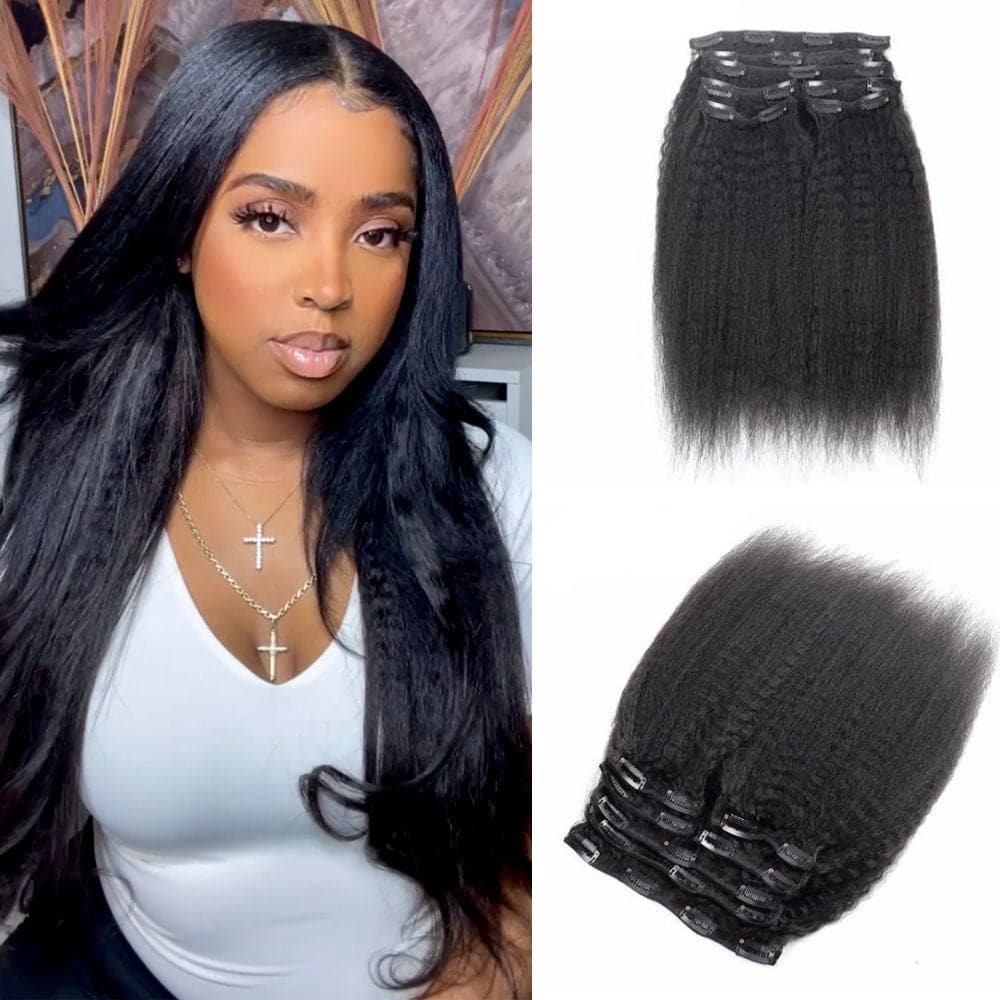
Match the wig to your wash-day hair. Choose the clip-in texture that looks like your leave-out after it dries on its own, so you blend with product and sets instead of straightening every morning.
Use a texture guide when you are unsure which pattern name fits you; our hair texture and curl pattern guides map common names to what you see in the mirror.
| Your leave-out | Clip-in patterns that blend | Blend method without heat |
|---|---|---|
| Stretched or blown-out coils | Kinky straight | Banding or braid-out overnight |
| Defined wash-and-go curls | Water curly, loose curly | Twist-out or finger coils |
| Loose waves | Body wave, loose wave | Curl cream and air dry |
| Tight coils worn natural | Multi-textured kinky curly | Twist-out on leave-out only |
When two patterns seem close, pick the one that matches your hair at the roots. Roots show first at the part and around each clip.
How many wefts and grams fit your hair thickness?
Start light and add only what disappears. Thick hair can hide more grams; fine hair needs fewer, thinner wefts placed where density is highest without stacking the crown area hard.
Product pages list pack contents and weights differently, so read the listing for your set rather than copying someone else's count. A working approach:
- Fine hair: fewer wefts, shorter lengths, avoid stacking at the crown.
- Medium hair: a full set as listed, with one weft held back as a spare.
- Thick hair: full set, and only add extras if the ends still look thin.
Weight is a comfort issue as well as a blend issue. Dermatology advice on extensions is to choose light weaves and extensions so they do not pull. Clip-ins you can remove at night already reduce wear time; keeping them light reduces pull while they are in.
Where does each weft go?
Place wefts under a clean horizontal part. Start near the nape and work up, leaving space so clips do not stack on one thin zone or peek through textured leave-out hair.
A simple map for a full head set:
- Bottom of the nape: widest wefts for length.
- Back of the head: medium wefts stacked with a finger of space between rows.
- Sides: narrower wefts, angled slightly to follow the hairline.
- Crown: thinnest wefts, or skip if your hair is fine.

Leave a clear part at your crown and temples so clips never sit on the hairline. Comb your leave-out over the top track and check from the side and the back before you leave the house.
Leave breathing room at the crown; stacking three heavy wefts there is a common reason textured leave-out cannot hide clips.
How do you blend leave-out without heat?
Set the leave-out to match the wefts. Rods, twists, banding and curl cream shape your hair to the clip-ins overnight so you are not flat-ironing a small section every morning.
Dermatologists advise limiting flat irons and hot combs to special occasions and using the lowest heat when you must. For daily clip-in wear, overnight sets are kinder:
- Twist or braid the leave-out to match a curly set.
- Band or wrap to match kinky straight.
- Apply leave-in and air dry for waves.
Research on hair damage shows that heat and chemical processing wear down the outer layer of the fiber, and that damage does not grow out from mid-shaft. Keeping heat off the leave-out keeps the blend zone healthier for longer.
How do you wash and store clip-ins?
Wash them separately and store them flat or hung. Clip-ins tangle if they are washed with your hair or stuffed into a drawer while damp, so dry them fully first every single time.
Detangle gently using ideas from AAD curly hair tips when wefts are textured.
Detangle gently from the ends first, wash in lukewarm water with a mild shampoo, condition the lengths and rinse well. Cosmetic science notes that conditioners reduce friction between fibers, which is what keeps wefts from matting in storage. Air dry on a hanger with the clips closed, then store in a satin bag or on a stand. Our clip-in FAQ page covers product-specific care questions.
Air-dry wefts flat or hanging, then store in a satin pouch so textured patterns do not mat between wears.
When should you pick seamless over classic?
Choose seamless when leave-out is fine or short. Seamless or invisible-edge tracks sit flatter and hide more easily; classic lace wefts are sturdier and often better for thick hair that can cover them.
| Weft type | Best for | Trade-off |
|---|---|---|
| Seamless / invisible edge | Fine or low-density leave-out | Less bulk, sometimes less durable clips |
| Classic lace weft | Thick hair, frequent wear | More bulk to hide at the track |
If you can see a ridge when you run a finger over the track under your hair, switch to a thinner weft or move that row down.
Seamless wefts can sit flatter under fine hair; classic wefts can feel sturdier for thicker textured hair. Confirm construction on the product page.
Choose based on how flat the weft must sit under your density, then confirm on the product page.
What is the newest hair extension method?
New methods appear often; none replaces fit and texture. Marketing names change faster than the basics of weight, placement and blend, so judge any method by how gently it attaches and how well it matches your hair.
Clip-ins remain one of the lowest-commitment options because they come off at night and need no glue or sewing. Alternatives such as tape-ins, microlinks and sew-ins each add longer wear and more installation skill. A dermatology review of camouflage options notes that methods without adhesives are generally preferred for scalp health, while adhesives and tight attachments raise risk when they pull.
If a method is new to you, ask how it is removed, how much tension it places on the root and whether you can take it out at home. Those answers matter more than the launch name.
Textured leave-out changes through the month as humidity and wash days shift the pattern. If a clip-in set only matches after heat, it will fight you on laundry day. Choosing a pattern that matches your wash-and-go or braid-out shape keeps the blend honest without a flat iron.
Store wefts the way you would store a favorite blouse: clean, dry and not crushed. Clips last longer when they are closed in storage and not snagged on other wefts. A small inventory photo of your sets prevents duplicate buys when sales appear.
Texture matching fails most often when wefts are too heavy for the natural hair or when leave-out is forced flat with heat. Match curl pattern first, then grams, then placement. If a weft shows through, move it or choose a lighter piece rather than pressing harder.
Store clip-ins hanging or flat in a satin pouch after they dry fully. Tangled wefts waste more time than a careful detangle after every third wear.
On wash day, detangle from the ends of each weft upward while the hair is wet and conditioned. Rough towel drying mats textured clip-ins faster than a gentle squeeze and air dry. If a clip loosens after months of wear, replace that weft rather than forcing a bent clip into the same spot.
Clip-ins on textured hair succeed when curl pattern and weft weight match first. Heat is a last resort for blending, not the default leave-out tool.
If a weft shows through textured leave-out, try a slightly smaller piece or a different row height before reaching for a flat iron. Blending is placement plus pattern match, not only heat.
Clip placement charts are starting points. Move a weft one row if it peeks through, and never stack three heavy wefts on a thin crown just to chase volume.
Move a peeking weft before you reach for heat. Pattern match and placement fix more blend issues than a flat iron on textured leave-out.
Which YWIGS collection fits clip in human hair extensions?
Start with the clip-in hair extension collection. It gathers seamless and textured options so you can match curl pattern first, then compare classic wefts if you need more durability.
Browse the clip-in hair extension collection for invisible-edge sets, and the classic clip-in collection for lace wefts. Check each product page for weft count and length before you buy, and match color in daylight against your leave-out.
Use the clip-in collection to compare classic and seamless constructions, then match curl pattern to your leave-out.
Match grams and weft count to your density after you choose the curl pattern, not before.
Filter by texture first, then compare weft style, then confirm grams and length on the product page for your density.
If you are new to clip-ins on coils, start with fewer wefts and add volume only after a full-day wear test.
Compare seamless and classic wefts side by side, then match curl pattern to your leave-out in daylight.
Clip in human hair extensions look natural on textured hair when the curl pattern matches your leave-out, the weight fits your density and you blend without daily heat. Place wefts where your hair can hide them, wash and store them gently, and choose seamless tracks only if your leave-out is fine enough to need them.
FAQ
Do clip in extensions work on fine hair?
They can, if you choose lighter wefts and fewer of them. Fine hair hides less, so place wefts where your hair is densest and avoid stacking heavy rows at the crown. Seamless or thinner tracks often blend better than bulky classic wefts. If clips dig or slide, you are carrying too much weight for your density. When details vary by product, treat the listing on the product page as the authority for that unit.
How long do real clip-in hair extensions last?
Lifespan depends on how often you wear them, how you wash them and how gently you detangle. Treat them like hair that no longer grows: low heat, conditioner and careful storage stretch their life. Check the product page for care notes for your texture. Replace a weft when the clips loosen or the ends stay tangled after washing. When details vary by product, treat the listing on the product page as the authority for that unit.
What are the best clip-in hair extensions for textured hair?
The best set is the one whose curl pattern matches your hair after a wash day, not after a blow-out. Kinky straight, water curly, body wave and multi-textured curly sets each suit different leave-outs. Match color in daylight and start with fewer wefts than you think you need. You can always add a piece; removing bulk mid-day is harder. When details vary by product, treat the listing on the product page as the authority for that unit.
