


Seamless vs Classic Clip In Extensions: Thin Hair, Thick Hair and Everyday Wear Compared
Seamless vs classic clip in extensions is one of the most common questions for clip-in shoppers, and the answer depends more on your hair than on the extensions. Seamless wefts use a thin, flat base. Classic wefts use a sewn lace or fabric base. Each hides better in some hair types and worse in others.
This comparison covers weft thickness, fit on thin and thick hair, all-day comfort, lifespan and a quick way to decide. Weft type, pieces and weight vary by set, so check each product page and the YWIGS clip-in FAQ.
How do seamless and classic wefts differ in thickness?
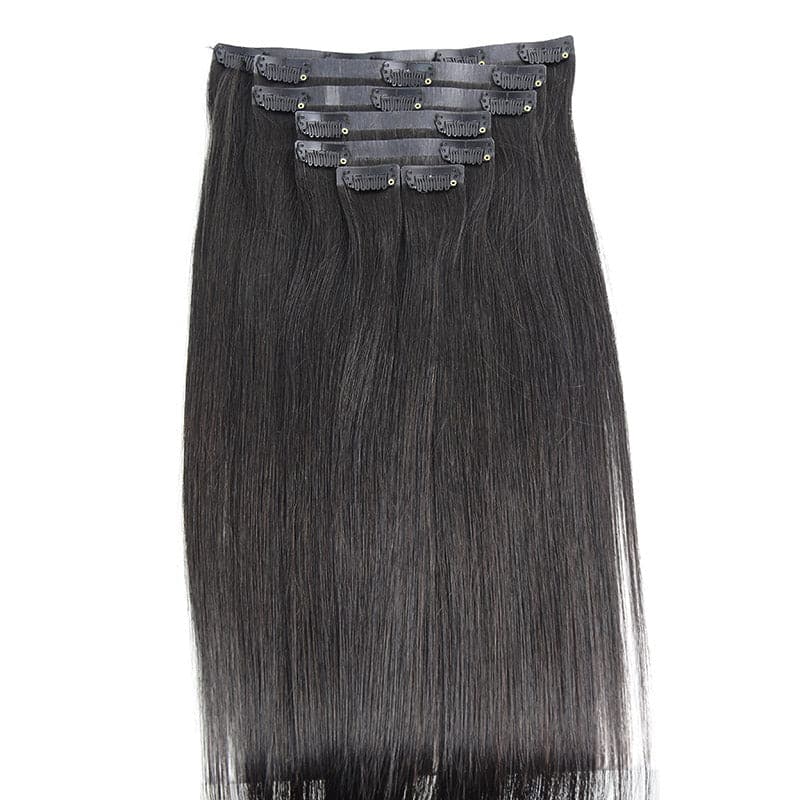
Seamless wefts are thinner and flatter. A seamless set uses a slim base, often polyurethane, so the weft lies closer to the head, while a classic set uses a sewn lace or fabric strip that is slightly thicker.
The difference is small in millimeters but noticeable in fine hair. A flat weft has less edge to show when hair moves or parts. A classic weft has more structure and often holds more hair at the base, which is why it can blend into thick hair easily.
Both styles use small clips sewn to the weft. The clips are what attach to your hair, so the base difference mainly affects how visible and how flexible the weft is. Feel matters too: some people prefer the soft bend of a seamless weft; others like the firm structure of a classic weft.
Which works better on thin or fine hair?
Seamless is often easier to hide. Fine or thin hair has less volume to cover a weft, so a thin, flat base is less likely to show at the part, temples or nape when your hair moves.
Fine hair also carries less weight comfortably. Use fewer pieces, place them away from the hairline and part line, and avoid stacking too many in one area. The AAD advice on hair habits recommends lightweight extensions worn for a limited time, which suits fine hair well.
Clip placement matters. Open each clip fully, place it at the root of a section thick enough to hold it and close it without twisting. A light tease at the root can help clips grip without pulling. If your thinning is new or patchy, the AAD overview of alopecia explains why a dermatologist visit should come first.
Which works better on thick hair?
Classic often blends more easily. Thick hair covers a slightly bulkier weft, and the fuller base on a classic weft matches the density of a full head, so the blend looks even.
Thick hair may need more pieces or a fuller set, especially to add volume rather than just length. Seamless sets can still work, but with very thick hair, the extensions may need extra pieces to avoid looking thinner than your own hair at the ends.
Match texture closely. A slightly different curl or wave shows more on thick hair, because more of your own hair surrounds each weft. Compare the classic clip-in set with the seamless options, and look at review photos on similar textures. Blend by cutting or shaping the extensions with your own hair.

How comfortable is each for all-day wear?
Both are comfortable when placed well. Comfort depends mostly on clip placement, total weight and how long you wear them, though some people find thin seamless wefts lighter and flatter against the head.
Classic wefts can feel more noticeable when lying down or leaning against a headrest, because the base is thicker. Seamless wefts bend more with the head. Neither should feel tight; pain or a headache is a sign that clips are too tight or too heavy, as the AAD guidance on extensions notes.
Give your scalp breaks. Remove clip-ins before sleeping and do not wear them every day without rest. A review of traction alopecia links long-term tension with hair loss, and research on hair camouflage cautions that repeated clip removal can break fragile hair. Open clips fully before removing them.
How do they differ in lifespan?
Care matters more than weft type. Both seamless and classic clip-ins can last with gentle handling, but the base, clips and hair wear differently depending on how often you wear and wash them.
Seamless bases can stretch or crease if folded or stored badly, while classic wefts can loosen at the seams over time. Clips can bend if forced. The hair itself dries out with heat and washing, as with any human hair. Check the product page for the care guidance for each set.
Wash clip-ins only when needed, detangle from the ends up and condition the lengths. A review of hair cosmetics explains how conditioners reduce friction between fibers, which limits tangling. Dry wefts flat, store them flat or hanging and avoid sleeping in them. A small routine adds a lot of life to either type.
How do you decide quickly?
Start with your hair thickness. If your hair is fine or thin, start with seamless; if it is thick and you want volume, start with classic, then adjust based on how each set hides.
Next, think about how you wear your hair. If you often wear it up or in half-up styles, a thinner seamless base is easier to hide near the part and temples. If you mainly wear it down and want lots of volume, classic wefts can deliver that fullness.
Finally, consider comfort and routine. If you lie back a lot or wear clip-ins for long days, the flatter seamless base may feel better. If you want structure and quick grip, classic is a solid choice. The full clip-in range lets you compare both in one place.
What extensions does Kim Kardashian use?
We found no verified source naming her method. Without a public statement from her or her stylist, any brand or method attributed to a celebrity is speculation, so it is not a reliable way to choose extensions.
Celebrity hair is often styled by professionals with access to custom color matching and blending, and the method can change from look to look. What works for a photo shoot may not suit daily wear.
The useful takeaway is how polished hair is achieved: close color matching, extensions blended and cut into the hair and careful styling. Those principles apply to seamless and classic clip-ins alike. Match your own texture and color, place wefts where your hair covers them and style them together with your own hair for the most natural finish.
Which YWIGS collection fits seamless vs classic clip in extensions?
Start with the seamless clip-in collection. It lists flat-weft sets in several textures, and each product page shows weft type, length, pieces and weight, which helps you compare with classic sets.
The classic clip-in range is small, currently a couple of listings, so compare those directly with seamless sets in the same texture. Read the clip-in FAQ for general questions about placement and care, and look at review photos to see how each weft sits once it is clipped in and styled.
Decide based on your hair thickness, the styles you wear most and comfort. After a week of wear, note how many pieces you used and where they hid best. That record makes your next set an easy choice and keeps your install consistent and comfortable from day to day.
Choosing seamless vs classic clip in extensions comes down to your hair thickness and how you wear them. Thin, flat wefts hide more easily in fine hair; classic lace wefts give grip and bulk that thick hair can carry. Check weft type, pieces and weight on each product page, then pick the one that disappears in your usual style.
FAQ
Are seamless clip ins better than regular clip ins?
Not better for everyone, just different. Seamless clip-ins use a thin, flat weft that lies close to the head, which helps them hide in fine or thin hair. Classic clip-ins use a sewn lace or fabric weft that is slightly bulkier but often grips well and blends into thick hair. Choose based on your hair thickness and which weft stays hidden in your usual styles.
Can you sleep in clip in extensions?
It is best not to. Clips can press into the scalp, pull on hair as you move and tangle the extension hair overnight. Remove clip-ins before bed, brush them out gently and store them flat or hanging. Taking them out each night also gives your own hair and scalp a rest, which is one of the main advantages of clip-ins over semi-permanent methods.
Which clip in extensions are best for thick hair?
Classic wefts are often the easier fit for thick hair, because the hair has enough volume to cover a slightly bulkier weft, and the extra hair on a classic weft blends with a full head. Thick hair may also need more pieces or a fuller set. Match texture closely and check pieces per set on the product page before buying.
More on this topic: Tape-In and Clip-In Extensions guide.
